
Skip to content

Cart

Your cart is empty

Lower Blepharoplasty

Lower Blepharoplasty with Dr. Baljeet Purewal

Patient Testimonial: Lower Eyelid Surgery

At Fresh Face + Eye, our board-certified surgeon, Dr. Baljeet K. Purewal, offers lower eyelid rejuvenation in New Jersey to patients who are seeking to refresh their faces and restore their confidence.

What is a lower blepharoplasty?

A blepharoplasty is eyelid surgery, and a lower blepharoplasty specifically addresses under eye bags. When excess fat is the reason for puffiness beneath the eyes, a blepharoplasty can be performed to remove this fat. 

Dr. Purewal is a surgical expert in eyelid surgery and this is the focus of her practice. In this surgery, she tightens any lower eyelid skin that sags for a fresh, natural look.

Why should I choose Dr. Purewal for my lower blepharoplasty?

Dr. Purewal is an award-winning surgeon who has a reputation for both precision and excellence. She’s been serving the Northern New Jersey area for well over 15 years, and including out of state and international patients. She has extensive experience in cosmetic, reconstructive, and plastic surgery procedures.

She is also an expert injector who specializes in cosmetic eyelid surgery and non-surgical facial rejuvenation treatments.

Dr. Purewal is committed to patient safety and uses her highly-developed, experienced surgical skills to provide exceptional service and natural results to each and every patient.

Give us a call or schedule your consultation online today!

Lower Blepharoplasty before and after photos
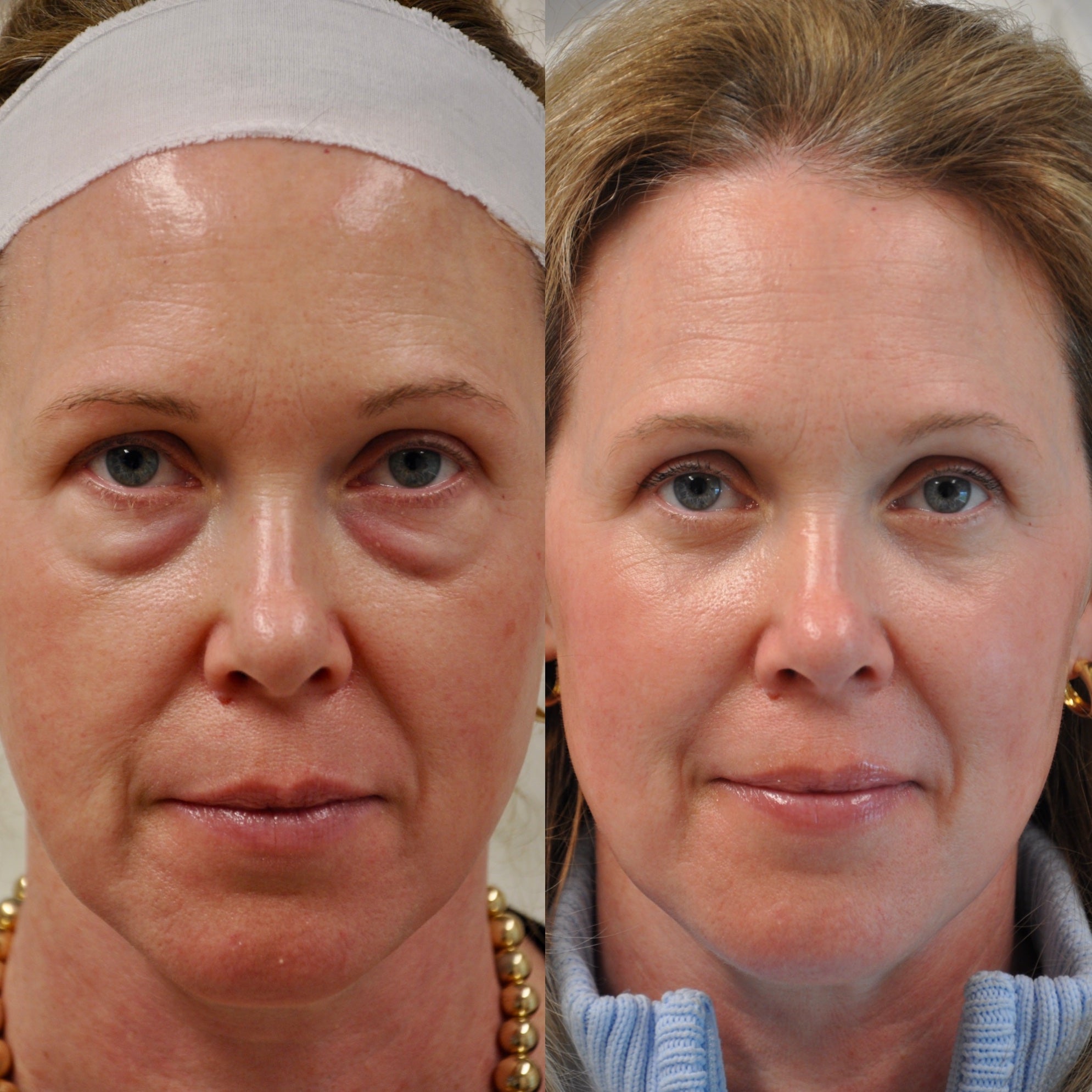
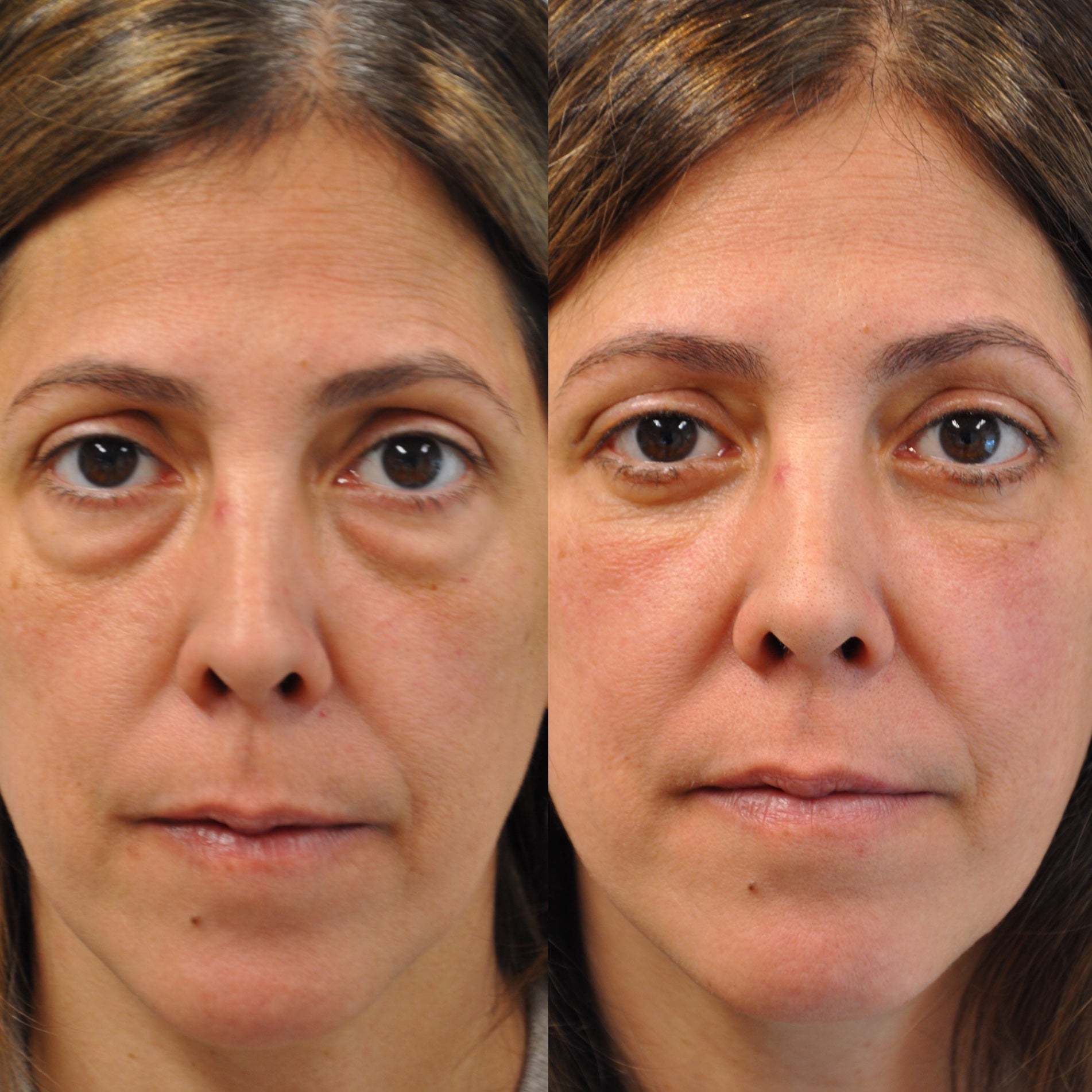
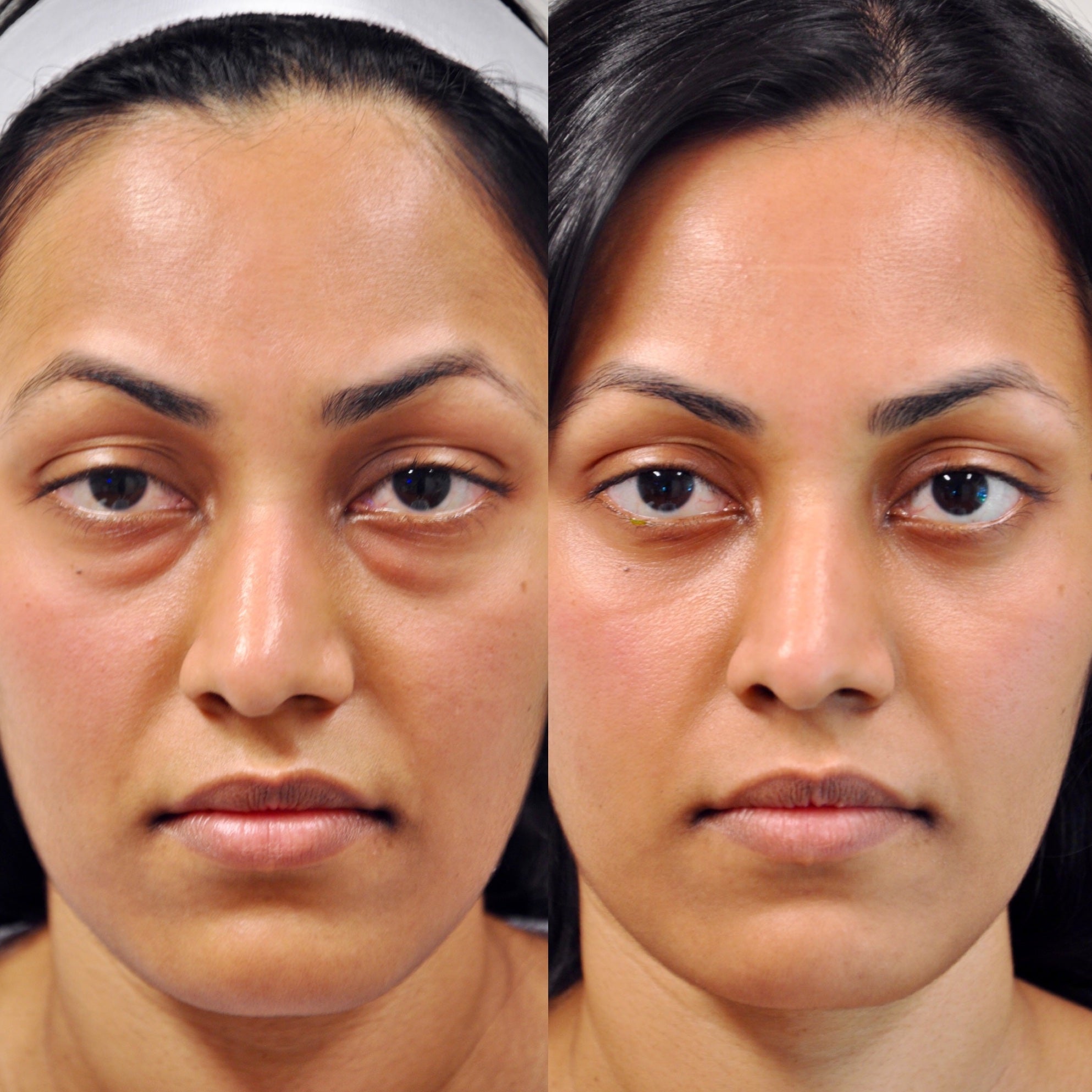
Considering a blepharoplasty? Check out real patient results after a lower eyelid surgery with Fresh Face + Eye.

What are the benefits of a Lower Blepharoplasty?

Lower blepharoplasty targets one of the most telling signs of aging, and one of the hardest to hide. 

By removing or repositioning the fat that causes puffiness beneath the eyes, the procedure smooths the under-eye area and softens the shadows that can make you look tired, older, or worn down even when you feel great.

Common benefits include:

  • A brighter, more rested appearance

  • Reduced under-eye puffiness and bags

  • Smoother transition between the lower lid and cheek

  • Improved appearance of shadows and dark circles caused by puffiness or hollowing

  • Natural-looking results that can last 10–15 years

For patients whose dark circles stem from pigmentation rather than structure, Dr. Purewal may recommend combining lower blepharoplasty with a complementary treatment like dermal fillers or laser resurfacing for a more complete result.

How do I know if I’m a suitable candidate for a blepharoplasty?

Ideal candidates for blepharoplasty are usually those who have puffy, sagging, or baggy lower eyelids that they feel make them look tired or older. For the best opportunity for recovery, ideal candidates should be in good health overall.

If you’re not sure if a blepharoplasty is right for you, call to schedule a consultation to discuss your options.

Can younger patients benefit from lower blepharoplasty?

Absolutely! Lower blepharoplasty isn't just for older patients. While many people associate eye bag surgery with aging, under-eye puffiness can appear much earlier in life due to genetics. If your family tends to develop bags under the eyes, you may notice them in your twenties or thirties regardless of how much sleep you get or how well you take care of your skin.

For younger patients with hereditary under-eye bags, lower blepharoplasty can be a long-lasting solution that no amount of skincare or concealer can replicate. The procedure is the same, the results are just as natural, and the improvement can be just as meaningful, sometimes more so, since you get to enjoy the results for longer.

Beyond surgery, check out our packaged options for patients in their 20s and 30s.


See How Dr. Purewal Explains the Difference Between Lower and Upper Blepharoplasty

The Eyelid Surgery Process: from Consultation to Recovery

The Process Starts with a Consultation

The first step of your surgical journey is a comprehensive consultation with Dr. Purewal.

During this consultation, we will review your medical history and perform a physical examination of your eyes and face.

You’ll have the opportunity to share any medical conditions, allergies, and information on current medications or supplements. Having this information helps us put together the most appropriate surgical plan for you.

Pre-Operative Instructions

Dr. Purewal will provide you with detailed instructions on what you should do before surgery. Every patient’s case is different, but you may receive guidelines on:

  • What to eat and not eat
  • Alcohol consumption and smoking
  • What activities to avoid

Since smoking in particular affects your body’s ability to heal, it’s best to stop smoking several weeks before and after eyelid surgery. We’ll also offer guidelines on medications and supplements.

Preparations for Surgery Day

A blepharoplasty is an outpatient procedure, so you will need to prepare the following:

  • Someone to drive you to and from surgery: During eye bag removal surgery, you will receive general anesthesia, so you’ll need someone who can drive you home after surgery.
  • Your home recovery space: When preparing your home recovery space, stock up on essential items like hygiene products, easy-to-prepare meals, and your favorite drinks and snacks. Create a cozy, comfortable space where you’re able to rest and sleep with your head slightly elevated.
  • Your mentality: Mental preparation can involve speaking with your surgeon or a therapist if you have anxiety about surgery. We’re happy to speak with you as much as possible to alleviate your concerns!

Your individual journey will be unique, but following these preparation steps can help ensure that your lower eyelid blepharoplasty goes smoothly while also setting you up for a rejuvenating recovery.

Surgery Day

Your lower eyelid surgery will be performed in a local ambulatory surgery center with an anesthesiologist. Our staff will be in close communication with you on when to report to the ambulatory surgery center.

First Few Days at Home

In the first few days after surgery, it’s important that you rest. Keep your head elevated as much as possible, even during sleep. This helps reduce swelling.

You can use a cold pack on your eyes intermittently to help increase comfort.

You should avoid certain activities that can strain your eyes, such as:

  • Heavy lifting
  • Too much reading, especially in dim light
  • Using electronics

Make sure you follow Dr. Purewal’s instructions on cleaning the incisions and eye area and using any eye drops or ointments you may be prescribed.

Post-Operative Check-Ups

After lower blepharoplasty, we schedule three post-operative visits: one week, one month, and three months after surgery. Each visit gives Dr. Purewal the opportunity to assess your healing, remove sutures if needed, and answer any questions about your recovery.

Your one-week visit focuses on early healing and confirming everything is progressing as expected. At your one-month visit, if your recovery is on track, we can begin discussing complementary treatments — Botox, filler, or laser — if you're interested. Your three-month visit is your final evaluation, and a good moment to create a longer-term plan for maintaining your results.

One to Two Weeks Post-Surgery

After a week or two, you’ll probably feel ready to return to work and/or social activities. Even if you’re feeling well enough to be out and about, you need to protect your eyes from the sun and wind by wearing sunglasses and applying sunscreen.

Long-Term Recovery

It may take several weeks for the full, optimal results of your surgery to become apparent as the swelling goes down. Your recovery process will vary based on your body, so don’t rush the process. Attend your follow-up appointments, don’t be afraid to ask questions, and enjoy your new, refreshed, rejuvenated look.

Preparing for a Lower Blepharoplasty: Common Questions

What should I expect from my initial consultation at Fresh Face + Eye?

Once you’ve scheduled your initial consultation, preparing a list of questions to ask can ensure you get the most out of your consultation.

Here are some of the most common questions our patients ask us:

  • What do you think is causing my symptoms?
  • Is this eye condition temporary? If not, what treatment approach would you recommend for me?
  • How much will the recommended treatment or under eye bag surgery cost?
  • Will I need follow-up appointments or additional treatments? If so, what are they and what can I expect?
  • What can I expect in relation to results?
  • Is there anything I can do at home to reduce my under-eye puffiness?
  • Will my health insurance cover this type of treatment?

At Fresh Face + Eye, we encourage you to ask any and all questions. We’re always more than happy to answer them all. We believe knowledge is true beauty.

Questions that Dr. Purewal will most likely ask you during your initial consultation:

  • How long have you had bags under your eyes?
  • Do these bags develop occasionally or are they always present?
  • Have you found anything that decreases the visibility of the bags under your eyes?
  • Is there anything that seems to worsen the bags under your eyes?

How long does the surgery take?

Approximately 1-2 hours, depending on complexity.

What happens during a Lower Eyelid Blepharoplasty?

The exact process of each individual blepharoplasty may vary depending on your individual needs. For example, sometimes patients want an upper blepharoplasty in addition to lower eyelid surgery. Here are some general steps during most blepharoplasty procedures:

  • Anesthesia: During a blepharoplasty, you receive anesthesia first. This will help increase your comfort throughout the surgery.
  • Incisions: Dr. Purewal then makes precise incisions. Depending on the surgical approach needed, she will either make these inside the lower eyelid or just below the lash line. Where the incisions are located depends on your specific needs.
  • Adjustments: Through the incisions, Dr. Purewal is able to remove or reposition excess fat and skin. This is the step of surgery that reduces under eye puffiness and bags while simultaneously smoothing out wrinkles and fine lines.
  • Sutures: Once the adjustments and enhancements to your eye area are complete, Dr. Purewal closes the external incisions using sutures and internal incisions do not require sutures.
  • Recovery: Once the blepharoplasty is done, we cover your eyes with gauze and a cold compress to minimize potential discomfort. We then move you to a recovery room, where we can monitor you until you’re cleared to go home.

The entire process from start to finish usually takes anywhere from one to two hours, depending on how complex the surgery is. For example, if you get an upper eyelid blepharoplasty in addition to under eye surgery, your surgery will last longer than if you were getting lower eyelid surgery by itself.

How much does a lower blepharoplasty cost?

During your initial consultation, Dr. Purewal can give you an accurate indication of how much your treatment will cost. Each individual patient is different and Dr. Purewal’s recommendations are tailored towards your specific goals.

The good news is: if you book within seven days of your blepharoplasty consultation, your consultation fee will be deducted from the total surgical cost.

Where is the surgery performed?

Your lower eyelid surgery will be performed at a local ambulatory surgery center.

Lower Blepharoplasty Recovery: Common Questions

How long does recovery from a blepharoplasty take?

Recovery times vary per individual, but most of our patients feel ready to return to normal activities about 10 to 14 days post-surgery.

How long do I need to take off work after a blepharoplasty?

How long you need to take off work largely depends on how you recover from surgery. Most of our patients take off between 10 to 14 days.

How soon after a blepharoplasty can I start wearing makeup?

You should avoid wearing eye makeup until Dr. Purewal gives you the go-ahead. For most patients, this is after your post-operative check-up, 10-14 days after surgery.

When are my post-op appointments with Dr. Purewal?

You’ll meet with Dr. Purewal one week, one month, and 3 months after surgery. If you have any concerns between appointments, please contact our team and we’ll determine if we need to see you sooner. Your post-operative timeline is a guide, not a strict schedule — your comfort and safety always come first.

When will I start to see results?

You'll notice a difference quickly, but the best results take a little patience. Most patients see meaningful improvement within the first two weeks as the initial swelling subsides.

Final results, where the under-eye area looks its smoothest and most refreshed, typically emerge over the following weeks as the remaining swelling resolves and the tissues settle. Most patients are seeing their full result by six to eight weeks post-surgery.

Will people know I had lower eyelid surgery?

Most won't, and that's exactly the point.

Our patients consistently tell us that friends and family comment on how rested and refreshed they look, without being able to put their finger on why. Dr. Purewal's approach is rooted in natural-looking results that enhance what's already there, not results that announce themselves.

How long do the results of a blepharoplasty last?

While the results of non-invasive methods like dermal fillers can last for several months, blepharoplasty results can last for years. Generally, the results from your eyelid or under eye surgery will last from 10 to 15 years.

Will I have bandages on my face after surgery?

No patches or bandages are placed over your eyes. We will cover the area with gauze and a cold compress immediately after surgery to minimize discomfort, but once you're home you won't have anything covering your face. Ointment may be applied to the incisions for lubrication, which can cause some temporary blurriness.

Is the surgery and recovery painful?

Most patients are pleasantly surprised by how manageable both are. The surgery itself is performed under anesthesia, so you won't feel anything during the procedure.

Post-surgery, some swelling, tightness, and bruising are normal in the first week, but significant pain is uncommon. Cold packs help with comfort in the first few days, and over-the-counter Tylenol is typically all that's needed for any discomfort.

We advise avoiding aspirin, ibuprofen, Advil, or Aleve, as these can increase the risk of bleeding.

What do I need to know about recovery from lower eyelid surgery?

Recovery is generally smooth and manageable. In the first few days, plan to rest with your head elevated, use cold packs intermittently, and avoid anything that strains your eyes, including excessive screen time, or reading in dim light. You may experience some blurred vision from the lubricating ointment and light sensitivity, both of which are temporary.

By one to two weeks, most of our patients feel ready to return to work and social activities. You'll want to protect your eyes from sun and wind with sunglasses when you're out. Stitches, if used, are typically removed within the first week.

Avoid strenuous activity for at least two weeks, and attend your follow-up appointments so Dr. Purewal can monitor your healing and clear you for makeup, contacts, and other normal activities.

Do I have to have additional treatments after a lower blepharoplasty?

Not at all. Discussions about complementary treatments, like Botox, filler, or laser treatments, are simply an opportunity to talk through what might enhance your surgical results if you're interested. Our goal is always a personalized plan that keeps you looking refreshed and natural. There's no obligation to do anything beyond the surgery itself.

When can I start other facial treatments after my lower blepharoplasty?

In most cases, we can begin talking about complementary treatments at your one-month post-operative visit. Lower blepharoplasty recovery moves a bit differently than upper lid surgery, swelling beneath the eye can linger longer, so Dr. Purewal will assess where you are before making any recommendations.

Common treatments patients explore after lower blepharoplasty include dermal fillers for residual hollowing at the tear trough, laser resurfacing to improve skin texture and tone around the eye area, and Botox for dynamic lines that surgery doesn't address. None of these are required — they're simply options worth knowing about when you're ready.

General Questions about Lower Eyelid Surgery

Why have I developed bags under my eyes?

As we age, it’s common for eyebags to develop.

The skin surrounding our eyes is actually the thinnest on our bodies and so is often the first part of the body to show the signs of aging: think wrinkles, eye bags, fine lines and looser skin.

There are several reasons for eye bags including skeletal changes and aging skin, however the main cause is due to a weakening of the tissues and muscles that support the eyelids.

Once these have weakened, they are unable to provide adequate support and allow the natural fat in the orbit of the eye to move forward into the lower lid. This fat previously helped support the eyes but once it moves forward the areas beneath the eyes begin to appear swollen or puffy.

Eye bags may also result from an accumulation of fluid and/or the onset of inflammation beneath the eyes.

If you experience repeated puffiness beneath your eyes and it’s something that bothers you, you may be a good candidate for eyelid surgery or a cosmetic procedure for under eye bags.

What are some common causes of eye bags?

Other factors, including lifestyle factors, that can cause eye bags include:

  • Lack of sleep
  • Fluid retention
  • Poor diet
  • Sun damage
  • Medical conditions that can cause eye bags include:
    • Kidney disease
    • Nasal congestion
    • Seasonal allergies
    • Eyelid dermatitis
    • Thyroid disease

Does lower blepharoplasty also address droopy eyelids?

Lower blepharoplasty focuses specifically on the area beneath the eye. It addresses under-eye bags, puffiness, and hollowing, but it doesn't treat drooping of the upper eyelid.

If droopy upper lids are also a concern, that's addressed through an upper blepharoplasty, which can be performed during the same surgical session. Dr. Purewal will assess both areas during your consultation and help you determine the right approach for your goals.


What are some non-surgical alternatives to a lower blepharoplasty?

At Fresh Face + Eye, surgery isn’t the only treatment method we have to help patients deal with the lower eye area.

If you’re not quite ready for eye bag removal surgery but still want to address your lower eye area, you can try some of our non-surgical alternatives, like dermal fillers, or laser resurfacing or RF microneedling.

The results of these treatments may be temporary, but they are less invasive than surgery and require less downtime.

Whether you move forward with surgery or stick with a non-invasive treatment will depend on:

  • Your personal preferences
  • Your health
  • Your specific under eye issues

A consultation with our team can help you determine the best approach to help you achieve your goals.

What is the difference between transconjunctival and external lower blepharoplasty?

There are two surgical approaches to lower blepharoplasty, and the right one depends on your individual anatomy and goals.

The transconjunctival approach places the incision on the inside of the lower eyelid, leaving no visible external scar. It's ideal for patients whose primary concern is under-eye puffiness or fat displacement with minimal excess skin.

The external approach involves a small incision just beneath the lash line and may be recommended when skin tightening is also needed. Any resulting scar is hidden along the lash line and typically becomes virtually imperceptible once fully healed.

Dr. Purewal will recommend the approach — or combination of approaches — that will give you the safest and most natural result for your specific anatomy.

Does a blepharoplasty get rid of dark circles under the eyes?

It depends on what's causing them. Dark circles that result from puffiness casting shadows, or from hollowing at the tear trough, can be significantly improved with lower blepharoplasty — sometimes dramatically so. However, dark circles caused by pigmentation or very thin skin may not be fully resolved by surgery alone.

During your consultation, Dr. Purewal will assess what's driving your dark circles and recommend the most effective approach. In some cases, combining lower blepharoplasty with dermal fillers or laser resurfacing delivers the most complete result.

Are there risks or possible complications associated with a lower blepharoplasty?

As an oculoplastic surgeon, Dr. Purewal takes a highly specialized approach to lower blepharoplasty, with careful attention to both cosmetic outcome and eyelid function. Like any surgery, lower blepharoplasty has potential risks, including swel

ling, bruising, dry eye symptoms, tearing, irritation, temporary blurry vision, infection, bleeding, scarring, asymmetry, undercorrection or overcorrection, hollowing, contour irregularities, and the possible need for revision surgery.

Because the lower eyelid directly supports and protects the eye, specific risks can include lower-lid retraction, lid lag, scleral show, or ectropion, where the lower eyelid pulls downward or outward. These changes can affect both appearance and eye comfort. Rare but serious risks include bleeding behind the eye, vision changes, and, extremely rarely, vision loss.

Dr. Purewal evaluates each patient’s eyelid anatomy, skin quality, lower-lid support, eye surface, and overall facial structure to help minimize these risks and determine the safest, most appropriate surgical plan.

Ready to get rid of those bags under your eyes?

Schedule your consultation with Dr. Purewal today — in person at our Chatham, NJ office or virtually from the comfort of your home.

Request a consultation online or call us at 973.635.4000.