
Skip to content

Cart

Your cart is empty

Upper Blepharoplasty

Upper Blepharoplasty (Eyelid Lift) with Dr. Purewal

Patient Testimonial: Upper Eyelid Surgery

See the world through fresh eyes. If sagging or drooping eyelid skin is a concern, consider Dr. Baljeet Purewal at Fresh Face + Eye the blepharoplasty specialist for your eyelid lift.

What is an upper blepharoplasty for droopy eyelids?

Blepharoplasty is the term used to refer to cosmetic eyelid surgery. One of the best treatments for droopy eyelids, upper eyelid surgery is designed to rejuvenate the eyes by addressing saggy or drooping eyelids. 

Why should I choose Dr. Purewal for my upper blepharoplasty?

Dr. Baljeet K. Purewal is a Oculoplastics and Reconstructive Surgeon specializing exclusively in cosmetic eyelid surgery and non-surgical eyelid rejuvenation. With that tight specialization, she has conducted hundreds of upper blepharoplasties, addressing all sorts of facial structures for adults of all ages. She’s got hundreds of 5 star reviews across Google, US News, and Facebook, and dozens of before and after evidence of successful procedures.

Give us a call or schedule your consultation online today!

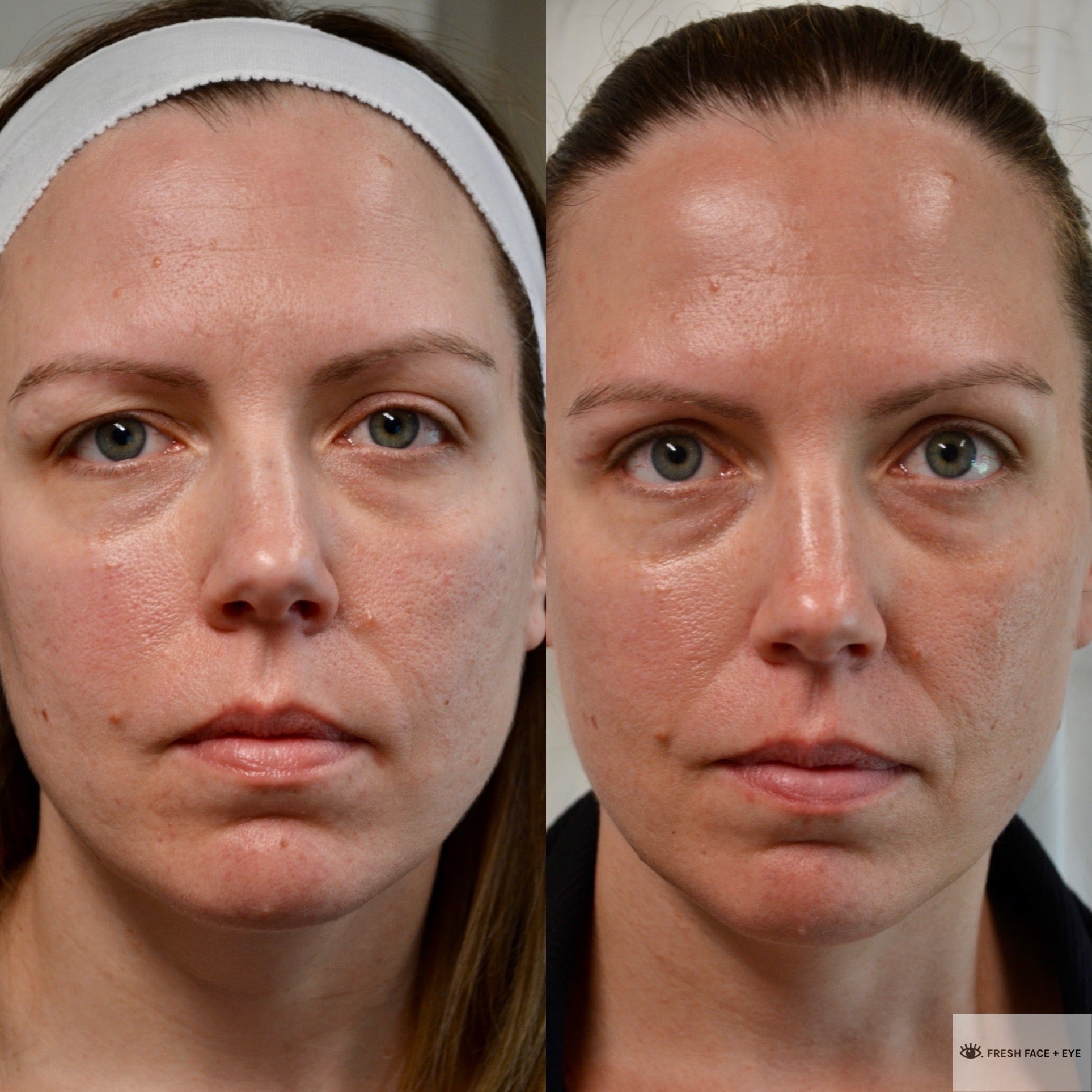
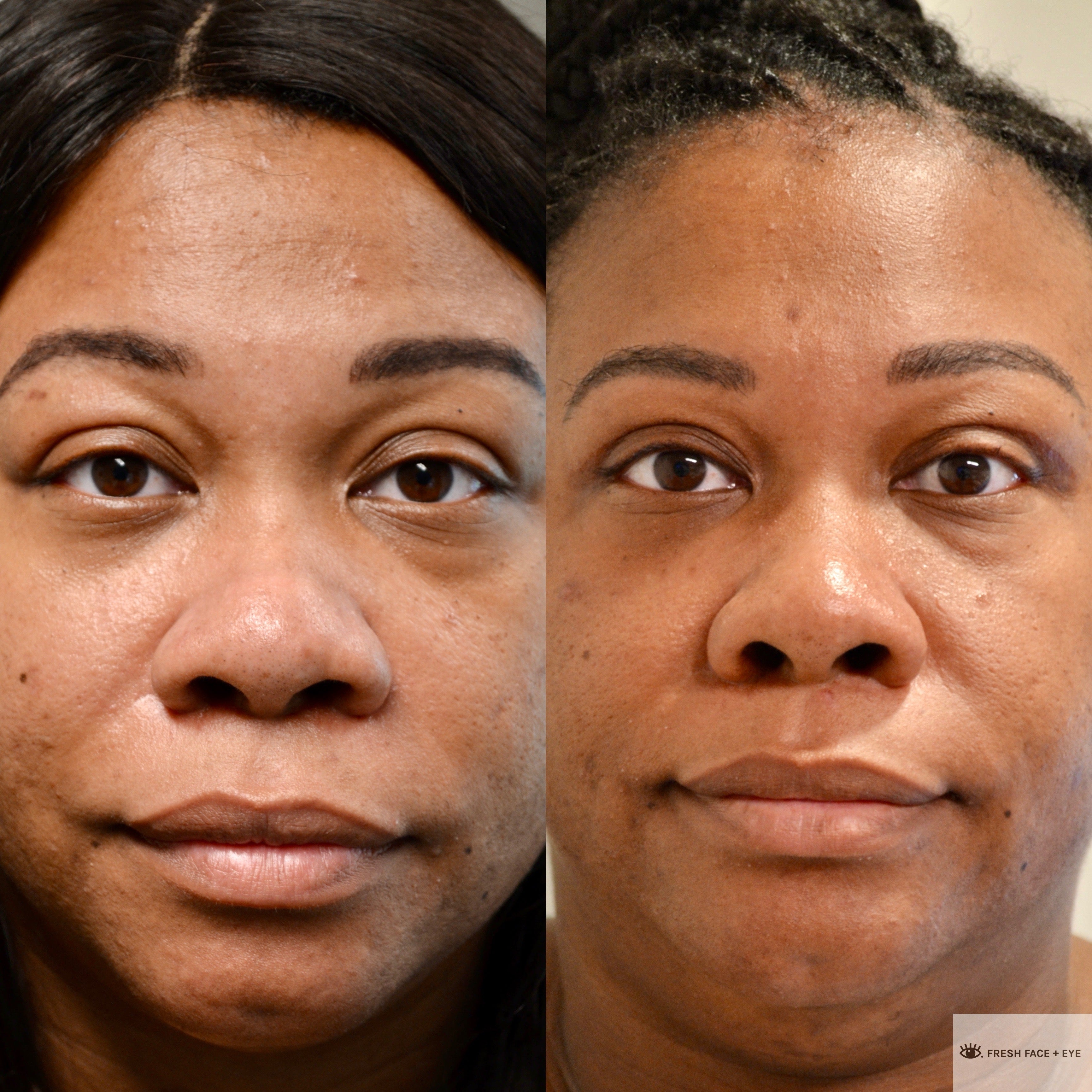
Upper Blepharoplasty before and after photos
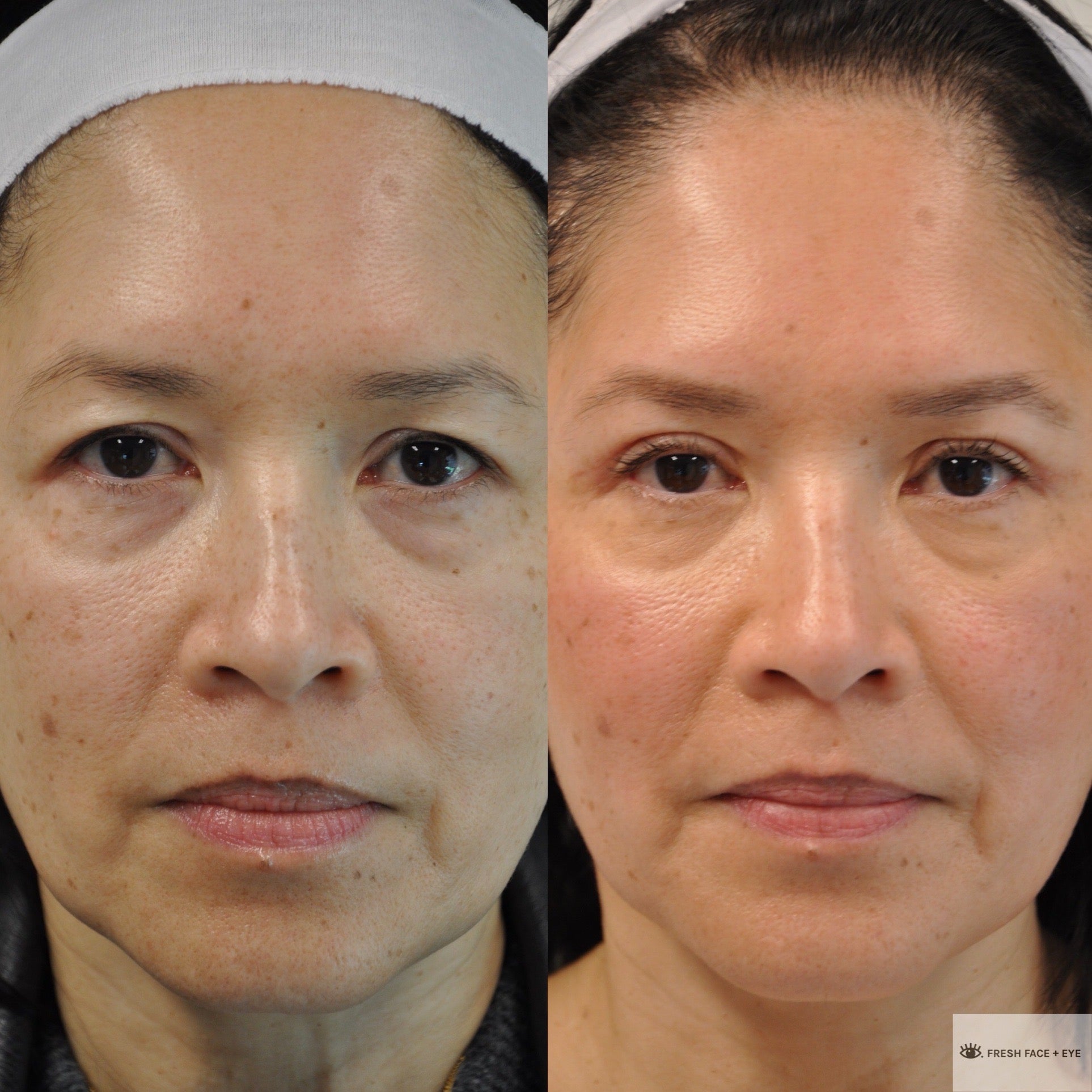
Check out Dr. Purewal’s successful upper blepharoplasties with before and after photos and videos.

What are the benefits of an Upper Blepharoplasty?

Upper blepharoplasty does more than refresh your appearance: it can genuinely change how you feel and see the world. 

By removing excess skin and fat from the upper eyelids, the procedure restores a more open, youthful eye shape while easing the heaviness that can make eyes look tired or aged. For some patients, it also improves peripheral vision that's been partially blocked by drooping skin.

Common benefits include:

  • A more alert, rested appearance

  • Lighter, less heavy-feeling upper lids

  • Improved peripheral vision in functional cases

  • Natural-looking results that can last 10-15 years

Am I a suitable candidate for an upper eyelid lift (blepharoplasty) surgery?

Our patients choose to have this procedure for both cosmetic reasons and to address functional issues.

If you have heavy folds, wrinkles, sagging upper eyelid skin, extra skin above eyelids, or puffiness that continues to bother you, you may be an excellent candidate for an upper eyelid lift, hooded eyelid treatment, or eyelid tightening.

Check out our upper eye lift before and after photos.

General Questions about Upper Blepharoplasty

What causes drooping or sagging eyelids?

Did you know the skin surrounding your eyes is amongst the thinnest and most fragile on the human body? As our skin ages, collagen production decreases, which results in a lack of elasticity. The continuous gravitational pull in combination with this loss of elasticity leads to an accumulation of excess skin on both the upper and the lower eyelids.

This extra fold may cause eyelids to feel heavier or hang over your lashes, obstructing your vision.

The fat responsible for providing a cushion between the eyeball and the skull may also bulge into the upper and lower eyelids. This occurs when the thin membrane holding this fat in place weakens, allowing the fat to come forward and reposition itself in the lids.

As we age, the muscles that support our eyelids also begin weakening. These weakened muscles can lead to fat accumulation above and below the eyelids. Heavy upper lids may also result from a descending eyebrow, excess skin on the upper lid, or both.

A number of treatments can address these concerns if you’re looking for eye sagging treatment solutions. As well as an upper blepharoplasty, Dr. Purewal can perform a lower blepharoplasty to address issues related to the lower eyelid and the area beneath the eye. All three of these procedures can be performed during the same surgical session.

What’s the difference between an upper blepharoplasty and a lower blepharoplasty?

The eyes age in two distinct ways, and each requires its own approach.

Upper blepharoplasty addresses the top lids, removing excess, heavy skin and fat that can make eyes look tired, hooded, or older than you feel.

Lower blepharoplasty focuses on the area beneath the eye, targeting puffiness, under-eye bags, and the hollowness that can cast shadows and contribute to a fatigued look.

While the procedures are different, they complement each other beautifully — and many of our patients choose to have both done in the same surgical session for a fully refreshed result. Dr. Purewal will help you determine which procedure (or combination) is right for you during your consultation.


I don’t want to look ‘done’ or surprised. How can I be sure to avoid that look?

We’re proud of and known for our natural-looking results. As a Board-Certified Oculoplastics and Reconstructive Surgeon who specializes in performing non-surgical facial rejuvenation treatments and cosmetic eyelid surgery, Dr. Baljeet Purewal has the artistic vision, extensive knowledge of the facial structure, and the skills necessary to provide you with beautiful, natural-looking results.

By reviewing photos from when you were younger and listening to your desired goals, we can achieve a result that is subtle while still making a significant improvement.

Many of our patients who have had surgery say their close friends or family comment on how rested they look and cannot directly discern that they underwent a surgical procedure.

What are my non-surgical options for the heaviness of my upper lids?

Your best non-surgical eye lift option, if the heaviness is slight, is botox placed strategically in the eyebrow area to achieve a chemical brow lift. This generally gives a 1-2mm lift of the brow and can make your eyes appear more open.

The downside of the procedure is that the lift is minimal and additional botox in the forehead area can counteract this effect. It also must be repeated every 3-4 months.

What issues will upper eyelid surgery not address?

Although an upper blepharoplasty rejuvenates and refreshes the eyes, it cannot eliminate the dark circles that sometimes develop beneath the lower eyelid. This procedure cannot address facial wrinkles or crow’s feet.

Many of our patients choose to have other procedures to address these issues at the same time they have their upper blepharoplasty.

Common additional procedures include:

Are there any potential risks or complications I should be aware of?

Although unwanted results and complications stemming from upper eyelid surgery are rare, they can occur.

These include:

  • Inflammation.
  • Pain.
  • Infection.
  • Scarring.
  • Bleeding.
  • An adverse reaction to the anesthesia.
  • Abnormal eyelid pigmentation.
  • Excessive tearing.
  • Whitehead formation (i.e., milia) following suture removal. This condition is typically treated post-operatively.
  • Difficulty keeping the eyes closed and/or completing a full blink, resulting in chronic dry eye.
  • Chronic dry eye that causes the patient to experience a burning sensation. This side effect can be addressed with artificial tears.
  • If a patient experiences difficulty keeping his or her eyes closed just while sleeping, this complication is usually temporary.
  • Injury to the levator muscles causing eyelid droop.
  • An asymmetrical result.
  • Blurred vision.
  • Double vision.
  • Vision loss (extremely rare).

Understandably, one of the main issues that concerns most patients is the accidental removal of too much skin from the upper eyelid, making it difficult to close the eye all the way. As an experienced Oculoplastics and Reconstructive Surgeon who specializes in upper blepharoplasty, Dr. Purewal is very conservative during the skin excision process.

Will insurance cover upper eyelid surgery?

Insurance does not cover eyelid surgery if you are choosing to have this procedure for rejuvenation purposes, as this surgery is considered cosmetic. However, insurance may cover a functional blepharoplasty in cases where sagging eyelids affect vision. Contact your insurance company to understand your coverage requirements. Our practice does not accept insurance but you may try to seek reimbursement directly from you insurance company.

Preparing for an Upper Blepharoplasty: Common Questions

How long does the surgery take?

Approximately 45 minutes to an hour.

How is the surgery performed?

A small incision is made in the natural crease of the upper lid.

After careful markings are made of the upper eyelid crease and the amount of skin to be excised, we use local anesthesia to numb the area. Any excess skin and fat responsible for puffiness in the inner corners of the eyelid are removed with electrocautery. We then stitch the wound close and apply ointment over the incision. There are no bandages, however, your vision may be temporarily slightly blurry from the ointment.

Where is the surgery performed?

At Fresh Face + Eye, We perform our upper eyelid surgeries in our office with local anesthesia, making it an accessible treatment.

Most upper eyelid blepharoplasty surgery can be performed comfortably with local anesthesia. If desired, local anesthesia with sedation can be performed in a surgical center.

What’s involved in my initial consultation with my eyelid surgery specialist at Fresh Face + Eye?

As an experienced specialist in cosmetic eyelid surgery and non-surgical rejuvenation procedures, Dr. Purewal knows the importance of managing your functional and aesthetic concerns. This is why she performs a thorough clinical evaluation of your eyes during the initial consultation.

As she performs this clinical evaluation, Dr. Purewal determines how well your eyes are functioning and looks for eyelid irregularities that are affecting your vision. Dr. Purewal also takes note of any aesthetic issues you would like her to address.

If you are considering other rejuvenating procedures (e.g., lower eyelid surgery, facial fillers, etc.), she will examine the areas of your face and eyes that correspond to the procedures you desire.

You will also need to discuss your medical history, including current medications and allergies. Having everything written down before arriving, such as a list of your current medications, will make filling out the registration paperwork much simpler.

This should include:

  • The type of medication being taken
  • The dosage
  • The reason for the medication
  • If you have any allergies to medications or latex
  • If you are taking any herbal supplements or vitamins.
  • Some of these products are known to thin the blood, which can cause unnecessary bleeding and excessive bruising following upper blepharoplasty.

Dr. Purewal needs to know if the patient has any allergies to medications and/or to latex.

Do I need to avoid anything before my surgery?

Ideally, Dr. Purewal prefers that her patients are nonsmokers who do not use any other type of product that contains nicotine (e.g., e-cigarettes, chewing tobacco, etc.). However, as long as you agree to stop using nicotine-containing products for at least four weeks before and four weeks after your upper eyelid surgery, we are confident you will have an uneventful recovery and natural-looking result.

This is because nicotine causes the muscles in the walls of the blood vessels to contract, which causes them to narrow. Nicotine usually affects the small arterioles and the large arteries (i.e., the oxygen-carrying vessels). Once the vessels become narrow, it takes longer for the oxygenated, nutrition-filled blood to reach the area of the body that is attempting to heal itself, thus, slowing the healing process and increasing the likelihood you will experience a complication (e.g., an infection).

What should I do to prepare for my upper eyelid surgery?

Ideally, you should schedule your procedure at a time when you will be able to relax for at least a week, preferably two. Having this downtime is essential because during these first two weeks you must avoid performing strenuous activities, bending down, and lifting heavy objects. Following these restrictions will help avoid complications.

If you take medications to thin your blood, you’ll need to discontinue those kinds of medications for two weeks before the procedure. However, prior to stopping any medication, you must speak with your prescribing physician.

To aid your recovery, we also advise purchasing the following items before your procedure:

  • Small gauze pads.
  • Artificial tears or eye drops: Before using any product in or on the eyes after the upper blepharoplasty, please get Dr. Purewal’s approval.
  • Ice cubes.
  • An ice pack (e.g., frozen peas, corn or freezer bags filled with ice).
  • Clean towels and washcloths.
  • If necessary, patients can use over-the-counter Tylenol for pain.
  • Due to an increased risk of bleeding, patients should avoid taking aspirin, Motrin, Advil, Aleve or Naproxen.

Upper Blepharoplasty Recovery: Common Questions

What is the recovery time and what should I expect to look like during my recovery?

We do our best to minimize swelling and bruising by preparing you ahead of time with supplements, careful intraoperative technique, and local medication. However, it is best to prepare for the downtime of 4-7 days and to “look like you had a procedure” for 1-2 weeks. Some of our patients return to working from home the next day, while others choose to go to work after 4 days with the knowledge that they will still have stitches and some swelling.

After one week, the stitches are removed and the swelling subsides significantly but is still present. Wearing glasses can camouflage some of this swelling and makeup can be worn except for directly over the incision area. Heavy lifting and bending should be avoided for several weeks to avoid complications with wound healing.

How long do the results of an upper blepharoplasty last?

Your results should on average last 10-15 years.

Will the shape of my eyes look different after my upper eyelid lift surgery?

The goal of the surgery is to rejuvenate your eyelids while preserving the shape of your eyes.

During your consultation, we’ll review photos of yourself when you were younger as well as discussing your aesthetic goals to ensure a natural, rejuvenated look.

For best results, you must be candid with Dr. Purewal and the team about what you would like your final upper blepharoplasty results to be. If Dr. Purewal is unable to visualize your goal, she cannot make recommendations to help you achieve your desired result.

How will my scars look once I am fully healed?

The upper lid incision is hidden in the eyelid crease. A small portion of it may extend outward to capture excess skin on the edges. This may appear pinkish in color several weeks after the sutures are removed depending on your skin type, and will fade over the next several months.

You may apply makeup 2-3 weeks after surgery.

Will I have dressings or bandages?

There are no patches or bandages placed over your eyes.

Ointment will be placed over the incisions and in your eyes for lubrication so you may experience temporary slightly blurry vision at this time.

Should I avoid wearing makeup after surgery?

We advise avoiding applying makeup directly over the incision site for approximately two weeks after surgery.

How long before I can return to my normal activities?

We know you’ll be eager to get back to normal activities. Following your eye skin surgery, your vision may be blurry for the first few days from the swelling and ointment. This may make it difficult to do extensive close-up work or to drive for 4-7 days. Most of our patients take 1-2 weeks off work.

Avoid bending, lifting, straining, or any aerobic activities for two weeks.

Is it painful after upper eyelid lift or droopy upper eyelid treatment?

The pain is generally minimal post-surgery.

Ice packs alleviate much of the discomfort for the first couple of days. You may use an over-the-counter pain reliever such as acetaminophen (Tylenol).

We advise avoiding any medication that may increase bleeding such as aspirin, ibuprofen (Advil, Motrin), naproxen (Aleve).

What do I need to know about recovery from upper eyelid surgery?

Inflammation and/or mild bruising around the eyes is common following upper eyelid surgery. These side effects last from 10-14 days. You should expect your eyelids to look normal within a week or two.

Glasses can be worn directly after the procedure, however, patients who wear contacts must avoid wearing them for several weeks while their eyes heal. You should check with Dr. Purewal before wearing makeup.

When should I come back after surgery to review my results?

We typically schedule three post-operative visits after surgery: one week, one month, and three months. Each visit allows Dr. Purewal to monitor your healing, answer questions, and guide you through the next stage of your recovery.

Your one-week visit focuses on early healing — this is also when suture removal occurs, as the sutures used to close your incisions are finer than a strand of human hair and need to be removed within seven to nine days of surgery. We may also begin discussing broader aesthetic goals, and if appropriate, start planning complementary treatments for later in your recovery.

At your one-month visit, Dr. Purewal will reassess your healing. If you're interested in treatments such as Botox, filler, or laser and your recovery is progressing well, this is often when we can begin moving forward with those.

Your three-month visit is your final scheduled post-operative evaluation. Dr. Purewal will assess your results, discuss any remaining concerns, and help you build a long-term plan for maintaining or enhancing what you've achieved.

What if I have a concern between post-op appointments?

You don't need to wait until your next scheduled appointment if something feels off. Please contact the Fresh Face + Eye team so we can determine whether you should be seen sooner. Your post-operative schedule is a general timeline — additional follow-up is always an option depending on your individual recovery.

When can I have Botox, filler, or laser treatments after surgery?

For most patients, the one-month post-operative visit is when we begin considering complementary treatments. By that point, the initial swelling has subsided enough for Dr. Purewal to assess your healing and determine whether you're ready to move forward.

Timing is always individualized — it depends on how you're healing, which procedure you had, and what treatments you're interested in. If you have goals beyond the surgery itself, bring them up at your consultation or at any of your follow-up visits. We'll build a plan that makes sense for your recovery and your results.

Will I have to receive additional aesthetic treatments after surgery?

Not at all. Other treatments are optional. If you're interested in enhancing or maintaining your results, we want you to know what's available and when. If you're happy with your surgical result and have no interest in injectables or laser treatments, that's completely fine. Our only goal is that you leave looking and feeling like a refreshed version of yourself.

Ready for a fresh approach to beauty?

Whether you have more questions or you’re confident in moving forward, schedule your consultation today! 

Request a consultation online or call to schedule your appointment. Virtual consultations are also available.