
Skip to content

Cart

Your cart is empty

Ptosis Repair Surgery with Dr. Purewal

Lift, brighten and tighten with our eyelid lift and droopy eyelid treatment with top eyelid surgeon and Fresh Face + Eye founder, Dr. Baljeet Purewal.

What is ptosis repair?

Ptosis repair is a specialized surgical procedure that corrects the drooping of the upper eyelid, restoring both the function and the appearance of your eyes. 

When the muscle responsible for lifting the eyelid weakens or stretches over time, the lid can droop low enough to make you look perpetually tired, older than you feel, or even partially obstruct your vision. Ptosis repair addresses that directly, lifting the lid back to its natural position for a more open, alert, and balanced appearance.

Whether your ptosis developed gradually with age or has been present since birth, Dr. Purewal's background as a fellowship-trained Oculoplastics and Reconstructive Surgeon makes her uniquely qualified to treat it with the precision the procedure demands and the natural-looking results our patients expect.

Why should I get my ptosis repaired at Fresh Face + Eye?

Ptosis repair isn't a procedure that belongs in just any surgeon's hands, and at Fresh Face + Eye, it's exactly the kind of work Dr. Purewal was trained to do. 

As a fellowship-trained Oculoplastics and Reconstructive Surgeon, Dr. Purewal specializes exclusively in the eyes. That distinction matters more for ptosis than almost any other procedure. 

Smiling female oculoplastics surgeon in a patterned sleeveless top against a light neutral background

Unlike a general plastic surgeon who may approach ptosis by addressing excess skin, an oculoplastic surgeon understands the underlying muscle mechanics - the levator and the Müller's muscle - and corrects the actual cause of the droop, not just its appearance. The result is a lid that sits in the right position, looks natural, and functions the way it should.

That specialized expertise also means Dr. Purewal knows how to navigate the fine line between a lid that's too low and one that's overcorrected: one of the most common concerns patients bring to their consultation, and one of the most technically demanding aspects of the procedure to get right.

Beyond her training, Dr. Purewal has performed hundreds of ptosis repairs across a wide range of facial structures, ages, and underlying causes. She's earned hundreds of five-star reviews across Google, US News, and Facebook, and her before and after results speak for themselves.

Give us a call or schedule your consultation online today!

Ptosis Repair before and after photos
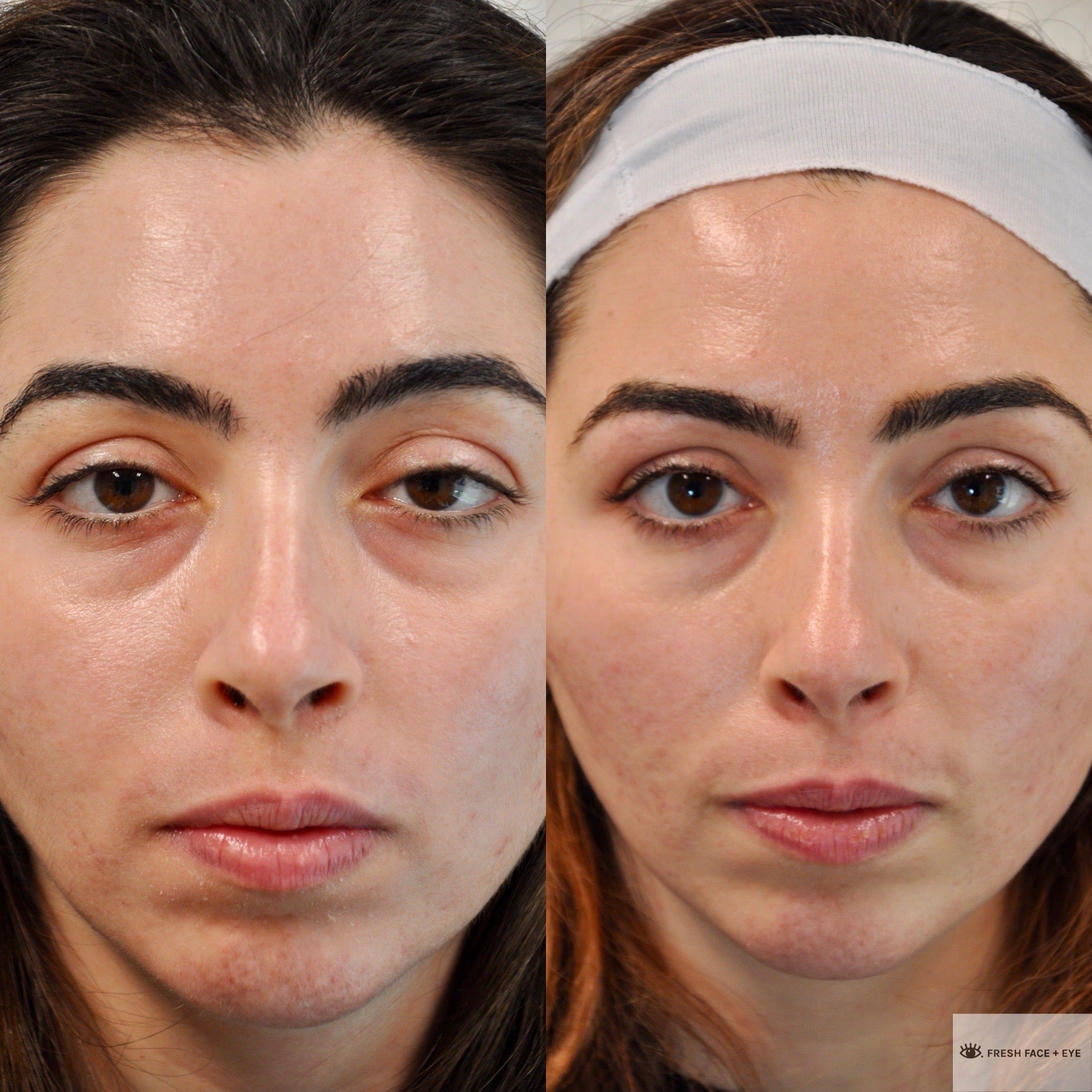
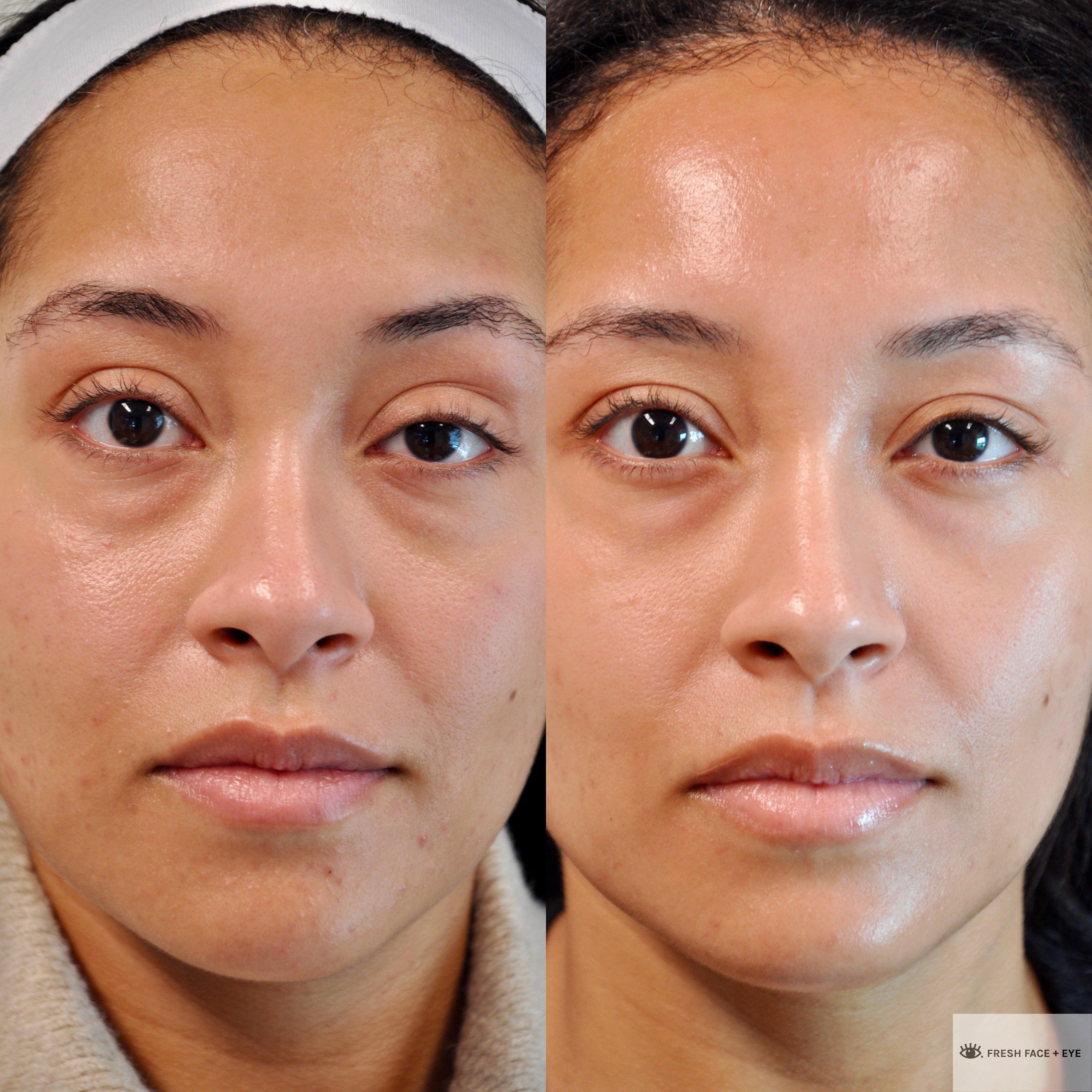
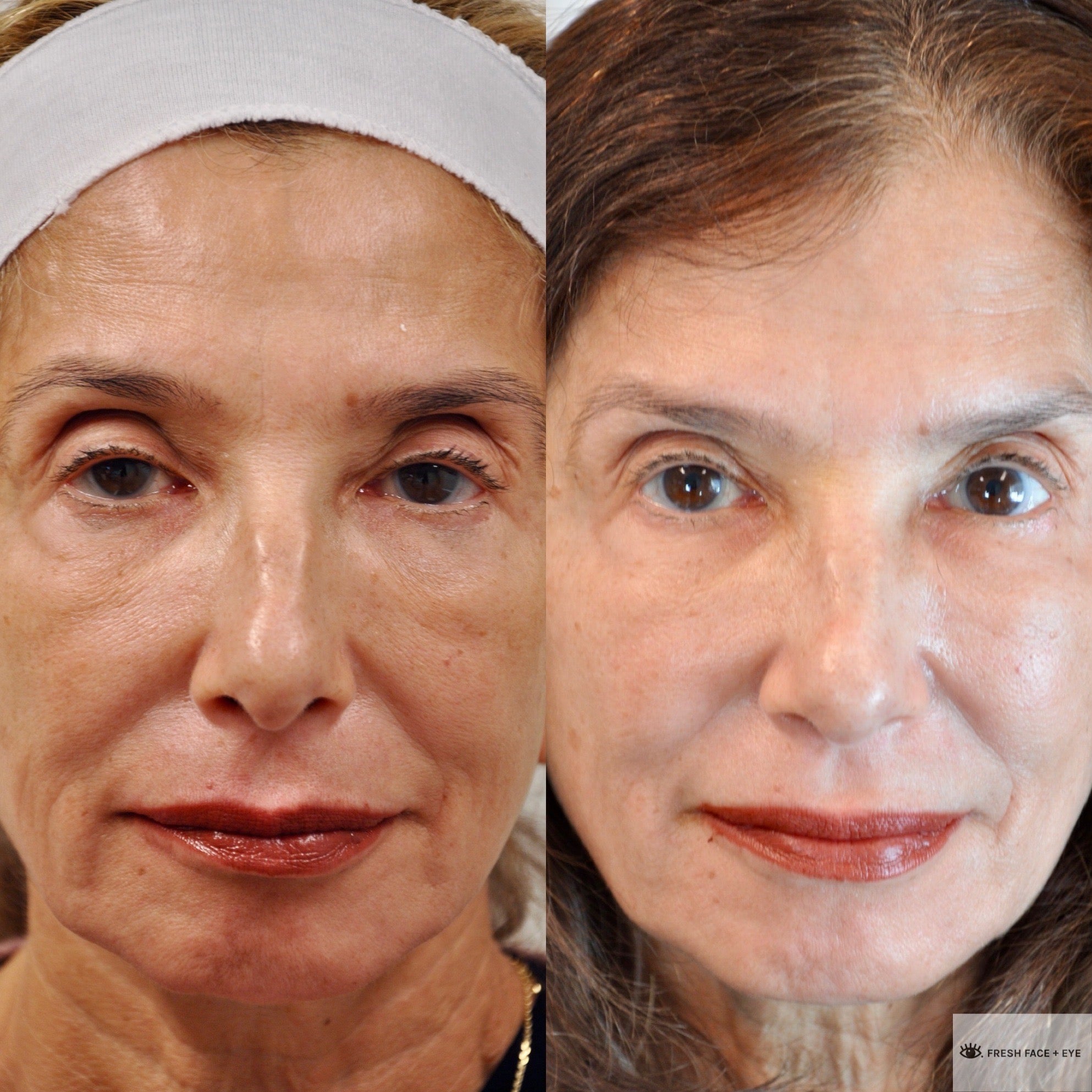
Explore our successful ptosis repair before and after results, with photos of women and men from 25 to 60!

What are the benefits of ptosis repair surgery?

Ptosis repair does something no skincare routine, eye cream, or concealer can: it corrects the underlying cause of a drooping lid and gives you results that are both visible and lasting.

Common benefits include:

  • A more open, alert, and symmetrical appearance

  • Eyes that look rested, even when you're not

  • Improved peripheral vision in cases where the drooping lid was obstructing your line of sight

  • Relief from the heaviness and fatigue that a drooping lid can cause

  • Natural-looking results that restore your eyes to where they should be, without looking altered or overdone

For many of our patients, the change goes beyond the mirror. When your eyes no longer look half-closed or asymmetrical, you stop being self-conscious about them in photos, on video calls, and in daily life. That shift in confidence is something our patients tell us about again and again.

How do I know if I’m a candidate for ptosis repair? 

You may be a good candidate if you:

  • Have one or both eyelids that droop lower than they should, making your eyes look asymmetrical, tired, or half-closed

  • Notice that your upper lid covers part of your pupil or interferes with your line of sight

  • Find yourself unconsciously raising your eyebrows or tilting your head back to see more clearly

  • Have been told by a doctor that you have ptosis, or suspect you do based on a gradual change in your eyelid position

  • Are bothered by the appearance of your eyelids and feel they don't reflect how awake or alert you actually feel

Ptosis can affect patients of all ages, while it can be caused by aging, you can also be born with it.

During your consultation, Dr. Purewal will examine your eyelids, measure the degree of droop, assess the strength of the muscle responsible for lifting the lid, and determine whether ptosis repair is the right path forward for you.

Contact us to schedule your consultation today!

Will insurance cover ptosis repair?

Insurance may cover ptosis repair in the cases of medical necessity. Contact your provider to understand your specific coverage requirements.


General Questions about Ptosis & Ptosis Repair Surgery

What causes ptosis to occur?

Ptosis typically results from a weakening in the muscle responsible for raising the eyelid or from damage to the nerves that control the muscle. A droopy eyelid can sometimes be caused by:

  • Eye surgery
  • Eye trauma
  • Long-term use of hard and sometimes soft contact lenses

In some cases, ptosis may simply be caused by drooping eyelids or loose eyelid skin on the upper eyelid.

Occasionally the reason for ptosis can be more serious. As well as being a congenital disorder or as a result of injury or surgery, ptosis may be caused by:

  • Growth in the eyelid, such as a stye
  • Bell’s palsy
  • Diabetes
  • Stroke
  • Myasthenia gravis
  • Horner syndrome
  • Benign or malignant tumor, in rare cases

How is ptosis diagnosed?

Ptosis is typically diagnosed by an ophthalmologist, who can also determine the cause of the problem. In order to perform a comprehensive eye examination, the doctor may test your visual acuity, perform visual field testing, a slit-lamp examination, and, possibly, a tension test for myasthenia gravis.

If there is a suspicion of an underlying systemic disease, you will be referred to an internist or another physician for further investigation.

If you’re not sure if you have ptosis, give us a call for a consultation. Dr. Purewal can confirm a diagnosis and provide a recommendation for repair or other therapies.

What are the symptoms of ptosis?

Ptosis appears as the drooping of one or both eyelids and often one or more of the following symptoms:

  • Heavy feeling lid
  • Tired looking eyes
  • Reduced vision (with severe drooping)

As ptosis caused by aging is usually gradual, a sudden onset of symptoms is greater cause for concern.

Can ptosis be fixed?

Yes, droopy eyelids may be treated for cosmetic or medical purposes.

Severe drooping may obstruct vision as the eyelid gradually droops lower and lower, eventually covering the eye. If ptosis interferes with your vision, Dr. Purewal may recommend a blepharoplasty be performed to eliminate the drooping.

Young patients with mild to moderate ptosis should be examined regularly to check for other vision problems including amblyopia, refractive errors and muscular diseases.

How can a droopy eyelid be repaired?

As a specialist in cosmetic eyelid surgery, Dr. Baljeet Purewal has extensive knowledge of facial structure as well as the skills necessary to provide you with beautiful, natural-looking results from your eye skin surgery.

What’s the difference between ptosis surgery and an upper blepharoplasty?

Unlike an upper blepharoplasty, which removes excess skin and fat, ptosis repair works at the muscle level, correcting the underlying cause of the droop rather than just its surface appearance. The two procedures are often performed together when both issues are present, and Dr. Purewal will assess your eyelids during your consultation to determine the right approach for you.

How is ptosis different from just having heavy eyelids?

The cause is the difference between ptosis and heavy eyelids.

Heavy eyelids are a skin issue. Excess skin accumulates on the upper lid over time, folding downward and creating a hooded appearance. Upper blepharoplasty addresses this by removing that excess skin and fat.

Ptosis is a muscle issue. The levator muscle responsible for lifting the lid has weakened or stretched, causing the lid itself to sit lower than it should, often drooping over the pupil.

In some cases both issues are present at the same time, and Dr. Purewal can address them together in a single session. Getting the diagnosis right from the start is exactly why choosing an oculoplastic surgeon matters.

What happens if ptosis is left untreated?

As the lid continues to droop, it can progressively obstruct your vision, particularly your upper visual field. This can affect everyday activities like driving, reading, and working at a screen, often so gradually that patients don't notice how much their vision has been impacted until it's addressed.

Many people with ptosis unconsciously compensate by raising their eyebrows or tilting their head back to see clearly, which can lead to chronic headaches and neck or forehead tension over time.

If you've noticed a change in your eyelid position, it's worth having it evaluated sooner rather than later.

Preparing for a Ptosis Surgery: Common Questions

How long does ptosis repair surgery typically take?

Ptosis surgery takes approximately 45 minutes.

How will you determine if a ptosis repair surgery is the right treatment?

It all starts with a consultation. We’ll examine and diagnose your droopy eyelid to determine the best treatment for your situation. We’ll measure the degree of droop and determine the underlying issue. Further diagnostic testing may be required.

In this first visit, we’ll discuss your options and make a recommendation on what type of surgery to move forward with and whether to address one or both eyes.

After your surgery is scheduled, we’ll make sure you have all the information you need to feel comfortable and confident. And if you ever have any questions, give us a call!

Where is the ptosis surgery performed?

We can perform your ptosis repair surgery right here in our office with local anesthesia.

What should I do to prepare for my ptosis surgery? Is there anything I need to avoid?

Is ptosis repair surgery painful?

Are there any possible side effects of ptosis surgery?

Any surgery in the eye area can lead to a temporary dry eye. This can manifest as tearing, burning or blurry vision. We recommend the use of preservative free artificial tears frequently during the first week to help minimize dry eyes.

There is risk of the eyelid being too high or too low or asymmetric to the opposite eye. These possibilities are taken into consideration when developing a treatment plan and choosing the surgery that is predicted to yield the best results.

Electing to have your droopy eyelid surgery treatment with a skilled professional like Dr. Purewal gives you the best chance of the results you’re after.

What are my non-surgical options to repair ptosis?

Ptosis Surgery Recovery: Common Questions

What is the recovery time after ptosis repair surgery?

Recovery time depends on the type of surgery you receive.

For a mullerectomy surgery, where the incision is on the back surface of the eyelid, recovery time is minimal, as patients typically have less bruising and swelling than with an external incision. With this type of ptosis surgery, most of our patients feel comfortable returning to their daily activities 1-3 days after surgery, although this may vary with your experience.

For an external levator advancement surgery, there may be slightly more swelling and bruising. Most of our patients return to their daily activities approximately 4-7 days after surgery, although we recommend avoiding heavy exercise for 2-3 weeks. After one month, 90% of the swelling will go down.

Note that the lid position can fluctuate the first few weeks after surgery because of swelling, and after 1-3 months you can expect to see your final result.

What are the different types of ptosis surgery? Do you offer both?

Yes! At Fresh Face + Eye, we conduct both a mullerectomy and an external levator advancement, which vary by the process and incision.

In the case of a mullerectomy surgery, the incision is created on the back surface of the eyelid. The procedure takes approximately 30 minutes.

If you are not a candidate for mullerectomy surgery, Dr. Purewal can perform an external levator advancement. This incision is made in the eyelid crease and sutures are placed and removed approximately one week later. This surgery takes approximately 45 minutes.

Can ptosis come back after surgery?

The majority of our patients enjoy results that hold up well for many years. That said, because ptosis is a muscle condition, and muscles continue to age, there is a small chance that some degree of drooping can return over time, particularly in patients whose ptosis was caused by gradual age-related stretching of the levator tendon.

Other factors that contributed to the original ptosis, like long-term contact lens wear or a history of eye surgery, can also play a role in whether the condition recurs.

If ptosis does return, it can typically be addressed with a revision procedure. Dr. Purewal will discuss your individual risk factors during your consultation and help you understand what to realistically expect from your results over the long term.

Will I have visible scars from a ptosis repair surgery?

It’s very unlikely that you’ll have visible scars after recovery. The risk of scarring along the incision is low because the eyelid skin heals very well and the incision is hidden in the eyelid crease.

Ready to repair those eyelids?

Schedule a consultation with Dr. Purewal to take the first steps toward brighter eyes.